
Why Skeptical Executives Are Adding Meditation to Their Toolkit (And What Changed Their Minds)
I thought meditation was for people who had time to sit still.
I’m driven and results oriented. My energy seems to come from momentum. The idea of carving out time to just sit quietly felt like watching paint dry while my to-do list multiplied.
But I was leading enterprise sales teams in an environment where being sharp wasn't optional. Large deals. Executive-level clients. Complex technology. As a woman in that world, I couldn't afford an off day.
I stumbled into meditation through the side door. I've dealt with chronic joint issues since childhood. I recently got a diagnosis of Ehlers Danlos Syndrome, which made decades of pain and injuries finally make sense. My osteopath incorporated meditation into craniosacral treatments. It was offered naturally, like an AI assistant adding unexpected value you didn't ask for but needed anyway.
I liked the results. So I started using meditation on days when I had big presentations or important conversations. The benefits extended directly into my work life.
I needed help shifting focus deeply and quickly from one high-stakes topic to the next, one meeting to another, when the pressure was on.
What I discovered is that meditation isn’t a retreat from executive performance — it’s processing power optimization for your brain. And it’s not just anecdote: Stanford’s research shows measurable changes in stress physiology, and Fortune 500 companies from Google to Goldman Sachs have embedded mindfulness into leadership development programs precisely because sustainable high performance requires more than grinding harder.
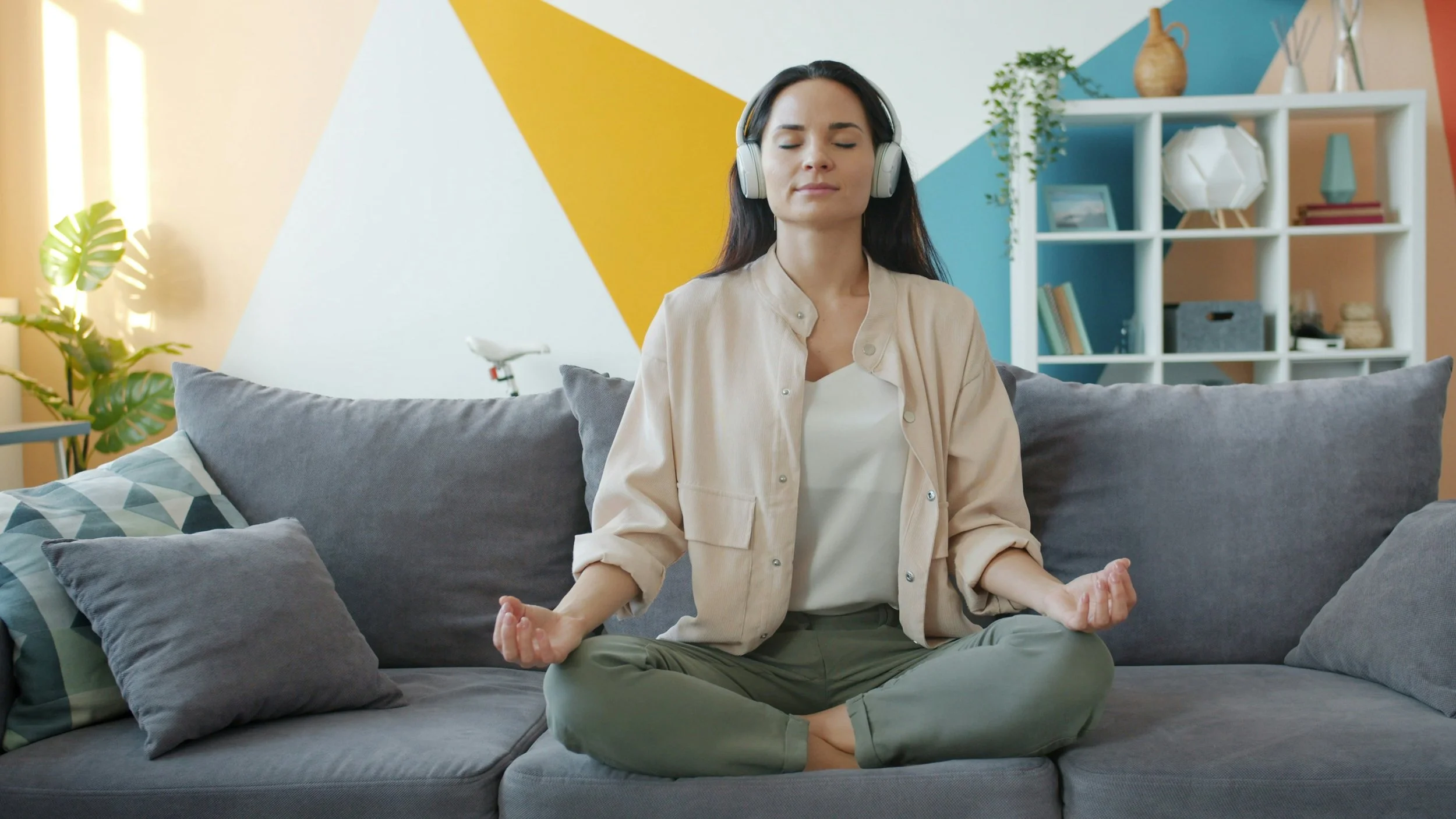
How Meditation Shifted My Executive Performance
We were hosting our annual client summit. Our most strategic clients in one room. A high-stakes speaking engagement where I needed to be sharp, present, and credible.
I've always gotten fueled by that kind of excitement. But sometimes it crossed a line. The enthusiasm would tip into nervous energy that threw me off balance. My mind would race. I'd talk too fast, and miss social cues.
That morning, I did a 15-minute guided meditation before the session.
Something was different. I still had the excitement. The energy that makes me good at what I do. But I could ride it without getting thrown off balance by the nervousness underneath.
I was present. Sharp. Reading the room. Responding instead of reacting.
That's when meditation stopped being a separate practice and started showing up in my actual work.
“That’s when meditation stopped being a separate practice and started showing up in my actual work.”
What Meditation Actually Does (For Skeptics)
Meditation trains your nervous system to distinguish between useful energy and destructive anxiety. Between an internal ‘yes’ and an internal ‘no’. Between remaining open and being closed off.
It also trains you to distinguish between energy you initiate (such as the gentle effort needed to get started) and the energy that's already there when you stop forcing it. The difference between pushing through a conversation and finding your natural rhythm in it.
When you're positioning your company as an AI leader in your industry—whether that's a product launch, an internal purchasing decision, or implementing technology decided by others—your brain is processing a massive cognitive load. Add high-stakes client relationships and decisions with incomplete data, and the complexity multiplies.
Meditation increases your capacity to handle complexity without burning out the personal neural network that is your mind, body, and nervous system.
At its core, meditation is attention training — the kind that lets you bring full presence to the moments that matter most.
The Research on Meditation and Executive Performance
Research backs this up. Stanford University School of Medicine reports a 30% decrease in stress-related symptoms following meditation practices. A study across four companies found significant improvements in personal performance, productivity, and team cooperation following workplace mindfulness training.
Google, Goldman Sachs, and General Mills all have meditation programs for executives. They've adopted these programs because they work.
If you’re weighing whether an app is the right starting point or whether you’d benefit from personalized guidance, I cover that decision in depth in [Meditation apps vs. personalized coaching — which do you need right now?]
The Three Objections I Hear Most About Meditation for Leaders—Answered
"My mind won’t stop—I can’t meditate."
The most common complaint: "My mind kept making lists. I couldn't stop thinking about everything on my plate right now."
Here's what every meditator experiences. That's the nature of practicing meditation.
Even experienced meditators have moments, days, and entire seasons where their practice gets co-opted by intrusive thoughts. It happens to beginners and veterans alike.
Meditation asks you to notice when your mind wanders and bring it back to the focus of your meditation practice. That's the rep. Like doing a bicep curl, the value is in the return, not in having a mind that never wanders.
“Meditation asks you to notice when your mind wanders and bring it back to the focus of your meditation practice. ”
When you notice your mental to-do list forming and choose to redirect your attention to the meditation, you're strengthening the neural pathway that lets you do the same thing in a high-stakes meeting. Notice distraction. Return to what matters.
That's the skill.
"How does meditation fit with my faith or values?"
I work with leaders across traditions — Christian, Jewish, secular, Buddhist-influenced, and interfaith. Mindfulness without dogma isn’t a compromise; it’s a feature. The goal is always to work with what’s already resonant for you.
When I teach mindfulness, I context-switch. I use examples and imagery that already resonate with you. If contemplative prayer speaks to your tradition, we work with that. If secular breath work feels right, we go there. If you connect with imagery from another wisdom tradition, we explore it.
I am knowledgeable and experienced in the world's major wisdom traditions, and I value all of my clients' lived experience. So the question is how can I help you work with what's already working for you.
And when we encounter practices or imagery that don't resonate, or that trigger resistance, we either explore why that's happening or we pivot to something that works better. That path depends on context, trust, and your goals.
"I don't have time to add meditation to my schedule."
I understand, because that’s where I started.
I began with brief meditations, favoring ones with music in the background to help maintain focus. I took exercise classes that incorporated breath work. I worked with physical therapists who taught practices that retrained both mind and body.
Over time, I found meditation teachers whose experience interested me and learned a variety of approaches. Still and silent practices. More active meditation techniques. The time I invested varied based on my job demands, travel schedule, family needs, and my growing interest.
Some day you may decide to dedicate more time to meditation. Perhaps at a retreat or workshop, or in a season of life where that’s what’s needed. But rarely do people start there. And when life gets busy, you can use on-the-spot practices. In the boardroom, walking between meetings, anywhere you need to reset.
Think of it like shifting gears in a manual transmission vehicle. You don't need to rebuild the engine. You need to let momentum carry you from one gear to the next.
The best practice is the one you actually use. Start with what fits your life now. A guided meditation with your morning coffee. Breath work before a difficult conversation. Three minutes of stillness before you check email. What matters is finding an entry point that matches your needs and interests.
What matters is finding an entry point that matches your needs and interests. Choose a practice that connects to something you're actually facing. When you notice the difference in a real situation that matters to you, the value becomes immediately clear.
“What matters is finding an entry point that matches your needs and interests. Choose a practice that connects to something you’re actually facing. When you notice the difference in a real situation that matters to you, the value becomes immediately clear.”
Building a Sustainable Meditation Practice (Even When Life Gets Busy)
I've worked through several challenges in my meditation practice. Life gets busy. Priorities shift. The practice can drop off.
Here's what I noticed: The skills stick with you. Like riding a bicycle or skipping stones across a pond. As you return to the practice, you notice a bit of muscle memory, or a subtle shift in timing that makes a big difference. No matter how rusty you’ve gotten, something of your prior skillfulness remains.
But new challenges require new growth. When I faced different types of pressure (new roles at new companies, navigating organizational change, building my own business) I needed to deepen the practice yet again.
Meditation is a toolkit that grows with you.
Why More Leaders Are Adopting Meditation Practices
Burnout isn’t a productivity problem. It’s a nervous system problem — and meditation is one of the most evidence-based tools we have for addressing it at the root.
The leaders I coach aren't adopting meditation because they've become less ambitious.
They're adopting it because the cognitive demands of their roles have increased faster than their capacity to handle them.
AI adoption. Rapid technological change. Distributed teams. Higher stakes. More ambiguity.
The executives who are managing their nervous systems more strategically are doing it because they know ‘just work harder’ is not the answer.
Meditation isn't a retreat from performance. It’s processing power optimization for your brain, and for the way you show up in the world.
“Meditation isn’t a retreat from performance. It’s processing power optimization for your brain, and for the way you show up in the world.”
I explore the paradox of why the executives who most need this practice are often the last to try it in The Executive's Meditation Paradox: Why Busy Leaders Need It Most.
Getting Started with Meditation for Leaders
Think about your biggest day next week. The presentation. The difficult conversation. The decision that matters.
Find a short guided meditation. An app, podcast, or recording that draws from a wisdom tradition that resonates with you. It could be contemplative prayer, secular mindfulness, or any approach that grabs your attention and makes you want to try it. You can find some of my favorites below.
That morning, set aside ten minutes. Sit quietly. Listen to the guided meditation and follow along.
It helps to plan for this one thing in advance. When it becomes difficult, return your attention to the sound of the guided meditation. If that gets frustrating, a gentle smile and lightheartedness help. No need to dwell on the frustration, just return to the practice. Gently and consistently.
It really can be that simple to get started. The interesting part is what happens during the rest of your day.
Notice if anything seems different as you go about your usual presentations, meetings, and decisions. Notice whether you're more present. Whether you catch yourself before reacting. Whether you read the room more accurately.
You don't have to believe anything in particular for it to work.
The question is whether you're curious enough to find out.
Recommended Guided Meditations to Get You Started
I've pulled together a few favorites — including one of my own — to help you find an entry point that resonates:
4 Minute Reset: Progressive Relaxation Guided Meditation (With Music) (New! Try it on YouTube) — Erica Eby
Sensing — Grounding Meditation — Miranda Macpherson
Breath Awareness Meditation — Mary & Richard Maddux
Sheltering in Grace Meditation — Miranda Macpherson
About Enliven
We help individuals like you meet challenges and navigate transitions with clarity and confidence. Through tailored coaching and mindfulness tools, we support executive and spiritual growth from the inside out.
More from the Enliven Blog
Search BlogsBlogs by Category