
Meditation Apps vs. Personalized Guidance: Which Do You Need Right Now?
Understanding when self-directed practices serve you, and when personalized support unlocks transformation
I've been meditating for twenty years. Not because I've achieved some perfect state of zen, but because meditation continues to change how I show up in the world.
I started with both a meditation app for weekly (and occasionally daily) practice and personalized guidance once a month. For the first ten years, this combination worked. I'd follow guided meditations on my own, then meet with a teacher to deepen my understanding and work through questions that came up.
Then something started happening.
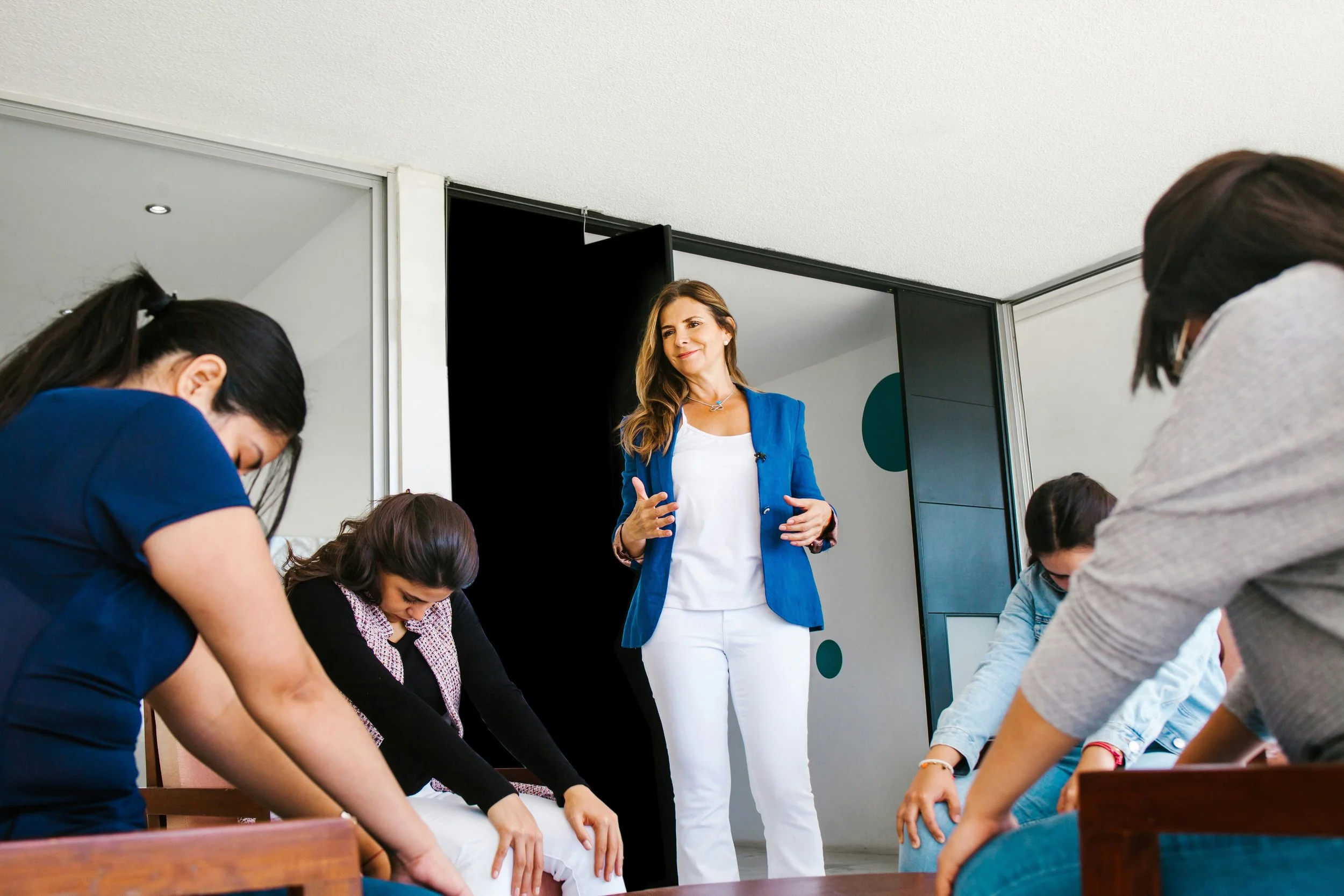
The Transformation
The clarity and composure I felt during meditation began showing up spontaneously—in difficult meetings at work, in tense conversations at home, in moments when I would have previously reacted with stress or frustration. My practice was spilling over into real life.
That's when I knew I wanted more. I sought out workshops and retreats, immersed myself in community practice, and eventually dedicated myself to helping others experience the same transformations:
Relying not only on the head, but also the heart.
Being open to grace for myself and others.
Seeing opportunities in every challenge.
Finding clarity in what feels like chaos.
Going from exhausted to enlivened.
“The clarity and composure I felt during meditation began showing up spontaneously—in difficult meetings at work, in tense conversations at home, in moments when I would have previously reacted with stress or frustration. My practice was spilling over into real life.”
Over these two decades, I've learned something: meditation apps and personalized guidance aren't competing approaches. They serve different needs at different stages of your journey.
The question isn't which one is better. It's which one do you need right now?
You've Done the Work. Downloaded the App. Read the Books.
Maybe you started meditating (or praying, or journaling) because everyone kept telling you it would help with stress. Or focus. Or sleep. Or all of the above.
So you did what any motivated person does: you researched. You downloaded the highest-rated app. You committed to a morning practice.
And it worked. For a while, maybe even for years.
You felt calmer. More centered. Better equipped to handle your day. The investment of 10 or 20 minutes each morning paid off throughout your waking hours.
But now something feels different.
Maybe your practice feels stale, or you're not sure if you're "doing it right." Maybe you've hit a challenge in your work or personal life where your usual meditation routine isn't providing the clarity you need. The familiar voice in your app still guides you through the exercises, but something's missing.
You're wondering: is this all there is?
When Meditation Apps Work
Meditation apps are incredibly valuable. They've made meditation accessible in ways that were unimaginable even fifteen years ago.
Apps are good at three things:
Flexible Timing That Fits Your Life
Need a 3-minute breathing break between meetings? A 20-minute session before bed? A 45-minute deep dive on Saturday morning? Apps give you the exact length of meditation you need in the moment. This flexibility matters when you're building consistency or navigating unpredictable schedules.
Variety and Exploration
Apps introduce you to a wide range of meditation styles, visualization techniques, and mindfulness exercises—all in one place. You can explore body scans, loving-kindness practice, breath awareness, mantra meditation, and more without committing to any single approach. This variety helps you discover what resonates.
Customizable Experience
The best apps evolve with you. Want more background music or less? Prefer guided instruction or extended silence? Need a gentle bell to mark transitions or continuous guidance? Apps can adapt to your changing preferences, creating an experience that is personal even when it's pre-recorded.
For many people, including me during those first ten years, apps provide so much of what’s needed to establish and maintain a meditation practice. They're accessible, affordable, and available whenever you need them.
Then Something Changes
You're still meditating regularly. Maybe you've tried different apps, explored new techniques, extended your practice time.
Yet you're facing something your 20-minute guided meditation doesn't seem to address.
It might be a challenge at work, a personal situation, or an obstacle within your meditation practice itself. The intensity can be different. The stakes feel higher. And that familiar app notification, while comforting, isn't giving you what you need.
You've hit an inflection point.
When Personalized Guidance Makes the Difference
Two things tell me when personalized guidance is particularly useful:
1. When You Get Stuck
Getting stuck can happen in two ways.
Within your meditation practice: You might lose motivation and let your practice slide despite good intentions. You might experience physical discomfort during sitting that makes practice feel like endurance rather than ease. You might wonder if you're "doing it right" or feel frustrated that your mind won't quiet down. You might sense you're not progressing but can't identify why.
Within your life: This is where meditation meets the real world, and where generic guidance often falls short. You face a work situation where your usual practices don't provide the clarity you need. You know what you want to believe, think, or do, but find it difficult to move forward in a way that aligns with both the situation and your deepest values. Your meditation might bring temporary calm, but you're still stuck when you open your eyes.
A meditation app can offer principles about working with difficulty or uncertainty. Sometimes personal guidance helps navigate your specific situation with its particular constraints, relationships, and stakes.
“Two things tell me when personalized guidance is particularly useful: When you get stuck, and when you want community connection.”
2. When You Want Community Connection
Meditation is often presented as a solitary practice—you, your cushion, and your breath. And it can be that.
But there's something powerful about practicing with others. About discussing insights and challenges with fellow practitioners. About feeling less alone in a journey that can sometimes feel isolating. About deepening your understanding through shared experience.
Community isn't just nice to have. For many practitioners, it becomes essential for sustaining and evolving their practice. Being part of a meditation community—whether through group sessions, workshops, or retreats—provides accountability, perspective, and connection that no app can replicate.
It can reframe the places where you're stuck. It can melt your defenses and release resentments. It can re-orient you with unshakable confidence and vibrant creativity.
What This Looks Like in Practice
Let me tell you about Amir, a CEO I worked with who was raising his second round of capital for his payments business.
Amir had a solid spiritual practice that included prayer. His practice and faith community helped him feel centered and focused—most of the time.
But during this fundraising process, something felt off. After each investor meeting, he'd replay the conversation in his mind. What was asked. How he responded. What he could have said better. He was exhausting himself trying to ensure he'd never again experience the discomfort of not knowing an answer on the spot.
Regular study and prayer helped him start the day calm. But by the time he was in those high-stakes meetings, the calm had evaporated.
After a couple of coaching sessions, everything shifted.
He was energetic. Laughing. Actually looking forward to his upcoming investor meetings.
What Changed?
First, we worked on reframing his entire relationship to these conversations. He'd been treating investor questions as pass-or-fail tests of his expertise. Instead, he began seeing the fuller truth that the investors were motivated to help him grow the business and were pointing the way forward in important areas. They were having substantive conversations with an experienced leader they believed in—not administering pop quizzes.
Second—and this is where personalized guidance differs from an app—I taught Amir "on the spot" grounding practices he could use during any video call or board meeting. Not 20-minute sessions he'd do in the morning and allow the effects to compound. But practices he could employ in the moment, right when he noticed himself starting to spiral into that replay loop.
A meditation app would have given him a 10- or 20-minute practice. What he actually needed was something he could use in the middle of a high-stakes meeting—and a reframe he couldn't see himself.
For Amir, the issue wasn't a lack of dedication. He was already devoted to his regular practice. What he needed was guidance that could meet him exactly where he was stuck, with practices tailored to his specific situation.
“For Amir, the issue wasn’t a lack of dedication. He was already devoted to his regular practice. What he needed was guidance that could meet him exactly where he was stuck, with practices tailored to his specific situation.”
What Becomes Possible with Personalized Guidance
When I work with students—whether one-on-one or in group settings—I see transformation happen in ways that continue to amaze me.
The tension in their face melts. Sometimes they feel the deep exhaustion of having tried so hard for so long. Then the vibrancy returns to their voice. Sometimes they feel elated, joyful. They frequently take the conversation in a direction I hadn't anticipated.
They come back to our next session sharing examples of insights, opportunities, and strengthened relationships that have been unlocked by their breakthrough.
Personalized guidance offers meaningful benefits:
Reframing you can't see yourself. We all have blind spots. Patterns of thinking that feel like truth but are really just interpretations—and they may not be serving us. A good guide reflects back what you're missing.
Practices tailored to your specific situations. Not just relaxation exercises, but techniques designed for your particular challenges. Practices you can use in a difficult conversation, during a moment of decision-making, through an entire season of transition—whenever you need them most.
Community connection and shared experience. Whether through group meditation sessions, workshops, or retreats, practicing alongside others creates a sense of belonging and shared humanity that deepens your practice in transformational ways.
Accountability and sustained practice. It's one thing to commit to yourself. It's another to have someone who knows your intentions and will walk along with you in the practice and transformation you're seeking.
Integration of meditation into challenging real-world moments. This is where the practice becomes transformative—when the clarity and composure you experience in meditation begin showing up spontaneously in your daily life, exactly when you need them.
That integration is what happened for me during those first ten years of practice. And it's what becomes possible when meditation moves from being something you do for 20 minutes each morning to a way of being that infuses how you show up throughout your day.
Both/And, Not Either/Or
Meditation apps and personalized guidance aren't competing approaches. They're complementary resources that serve you at different stages of your journey.
Many practitioners use both, including me. Apps for regular support and exploration. Personalized guidance when we hit plateaus, face new challenges, or want to deepen in ways that require more than a pre-recorded voice can provide.
Your needs will change throughout your meditation journey. What serves you for years might need to be supplemented or replaced as you grow. That's not a failure of the app, or of you. That's the natural evolution of any meaningful practice.
The goal isn't perfection, nor just a little bit of relief. It's transformation.
And sometimes, achieving that transformation requires more than you can access alone.
“The goal isn’t perfection, nor just a little bit of relief. It’s transformation. And sometimes, achieving that transformation requires more than you can access alone.”
What the Research Shows
The data supports this both/and approach.
Research shows that self-directed, silent practice packs the biggest punch. But only 3 out of 16 popular meditation apps actually emphasize this. Most apps focus on externally guided exercises, which help build skills and openness. They may or may not lead practitioners toward a self-directed practice that yields the most benefit.
Did you know that in research studies, 25% of people abandon meditation apps mid-study? These are motivated individuals who volunteered for research—and still, one in four aren’t able sustain engagement with generic tools.
Meanwhile, the self-improvement market reached $45.72 billion in 2024, and personal coaching holds the largest segment at 37%. Despite the explosion of self-help tools and apps, people are increasingly investing in personalized guidance.
Why? Because access to information and techniques are helpful, but usually not enough. Transformation often occurs when you have someone who can see what you can't see, meet you where you are, and guide you toward what you're capable of becoming.
“Access to information or techniques is helpful, but usually not enough. Transformation often occurs when you have someone who can see what you can’t see, meet you where you are, and guide you toward what you’re capable of becoming.”
The most accomplished people recognize that personalized support isn't admitting weakness—it's what unlocks their next level of growth.
Making the Choice
How do you know what you need?
Ask yourself:
About your practice:
Is my meditation practice consistent and satisfying?
Do I feel like I'm progressing, or have I plateaued?
Am I curious to explore different techniques and styles?
Do I have questions about my practice that I can't answer on my own?
About your life:
Are there challenges in my work or personal life where I feel stuck?
Do my current practices provide the clarity I need for difficult decisions?
Can I align my actions with my values, or does something feel off?
Do I want to integrate meditation more fully into challenging real-world moments?
About connection:
Do I feel isolated in my practice?
Would I benefit from discussing insights with other practitioners?
Do I want to feel part of a meditation community?
Could accountability and shared experience help sustain my practice?
If you answered yes to the first three questions, a meditation app may provide what you need right now.
If you found yourself saying yes to questions beyond the first three, it may be time to explore personalized guidance.
Ready to Explore What’s Next?
If you’re a high-achieving leader facing a challenge that feels different from anything you’ve encountered before, let’s talk. I work with executives and entrepreneurs who are ready for the clarity, confidence, and breakthrough that comes from personalized guidance.
More from the Enliven Blog
Search BlogsBlogs by Category